
Introduction
Preparing for nursing entrance exams can feel stressful, especially when time is limited. Many students study hard but still struggle because they don’t revise properly. The truth is, revision is just as important as studying new topics.
According to recent education data, students who follow structured revision plans improve their scores by up to 30% compared to those who study randomly.
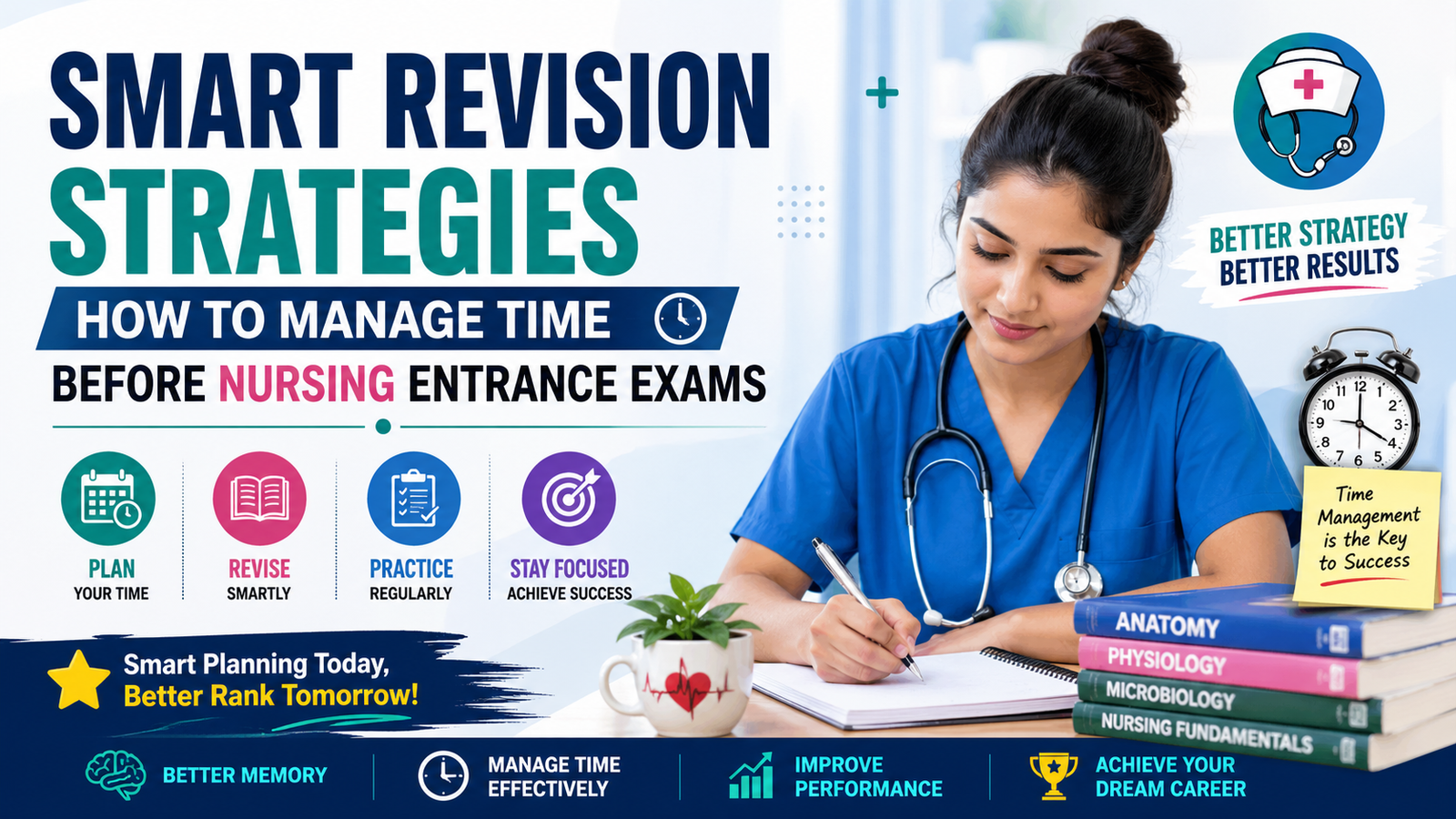
This guide will help you understand smart revision strategies for nursing entrance exams and how to manage your time effectively before the exam.
Why Revision is Important for Nursing Exams
Revision helps you:
- Remember concepts for a longer time
- Improve speed and accuracy
- Reduce exam stress
- Identify weak areas
Nursing entrance exams like AIIMS, NEET Nursing, and others focus on accuracy + time management, so revision becomes essential.
1. Create a Smart Study Plan
Without a plan, revision becomes confusing.
What to do:
- Divide your syllabus into small parts
- Set daily and weekly goals
- Keep the last 10–15 days only for revision
👉 If you’re looking for a complete guide, check our [Study Plan for Nursing Exams] (internal link to home page)
2. Follow the 50-10 Rule
This is one of the most effective smart revision strategies for nursing entrance exams.
How it works:
- Study for 50 minutes
- Take a 10-minute break
This method:
- Improves focus
- Prevents burnout
- Keeps your brain fresh
3. Focus on Important Topics First
Not all topics have equal weight.
Priority subjects:
- Biology (highest weightage)
- Chemistry
- Physics (basic concepts)
Studies show that over 60% of questions in nursing exams come from core biology topics.
4. Use Active Recall Technique
Instead of just reading, test yourself.
Example:
- Close your book
- Try to recall answers
- Write key points
This improves memory retention by up to 40%, according to learning research.
5. Practice Previous Year Papers
This is a must.
Benefits:
- Understand exam pattern
- Improve speed
- Identify weak areas
Students who solve at least 10 previous papers have a much higher chance of scoring well.
👉 You can also explore our [Nursing Entrance Exam Preparation Guide] (internal link)
6. Make Short Notes for Quick Revision
Avoid reading full books again and again.
Instead:
- Create short notes
- Use bullet points
- Highlight formulas and diagrams
These notes help in last-minute revision.
7. Use Time Blocks for Each Subject
Divide your day smartly.
Example Schedule:
- Morning: Biology
- Afternoon: Chemistry
- Evening: Physics
- Night: Revision
This keeps your preparation balanced.
8. Take Mock Tests Regularly
Mock tests are very important for time management.
Why?
- Simulates real exam environment
- Helps reduce exam fear
- Improves time handling
Data shows students who take weekly mock tests improve their scores by 20–25%.
9. Avoid New Topics at the Last Moment
Many students make this mistake.
Instead:
- Focus only on revision
- Strengthen what you already know
Trying new topics can:
- Create confusion
- Increase stress
10. Take Care of Your Health
Good health = Better performance
Tips:
- Sleep at least 6–7 hours
- Eat light and healthy food
- Stay hydrated
A tired brain cannot perform well, no matter how much you study.
11. Use Smart Time Management Techniques
Time management is the key to success.
Tips:
- Set timers while studying
- Avoid distractions (mobile, social media)
- Use apps for focus
👉 Learn more in our [Time Management for Students]
12. Stay Positive and Confident
Your mindset matters.
- Avoid negative thoughts
- Believe in your preparation
- Stay calm during revision
Confidence can improve your performance significantly.
Common Mistakes to Avoid
- Studying without a plan
- Ignoring revision
- Not practicing mock tests
- Studying for long hours without breaks
- Last-minute panic
Best Resources for Nursing Preparation
Using the right guidance helps a lot.
👉 Explore our [Best Nursing Coaching Institute]
👉 Get expert advice from our [Nursing Career Guidance]
Conclusion
Preparing for nursing entrance exams is not just about hard work—it’s about smart work.
By following these smart revision strategies for nursing entrance exams, you can:
- Improve your memory
- Manage time better
- Boost your confidence
Remember, even small improvements in your revision strategy can lead to big results in your final score.
Stay consistent, stay focused, and success will follow.
FAQs
1. How many hours should I study before nursing entrance exams?
You should study 6–8 hours daily, including revision and mock tests.
2. When should I start revision?
Start revision at least 1 month before the exam.
3. Is solving previous year papers enough?
No, but it is very important. Combine it with revision and mock tests.
4. Which subject is most important for nursing exams?
Biology carries the highest weightage.
5. How can I improve my speed in exams?
Practice mock tests and timed question solving regularly.
6. Can I crack nursing exams in 2 months?
Yes, with proper strategy, smart revision, and consistent practice.
